Managed Autorotation℗ – next generation of multi fuel hybrid eVTOL cargo flight.
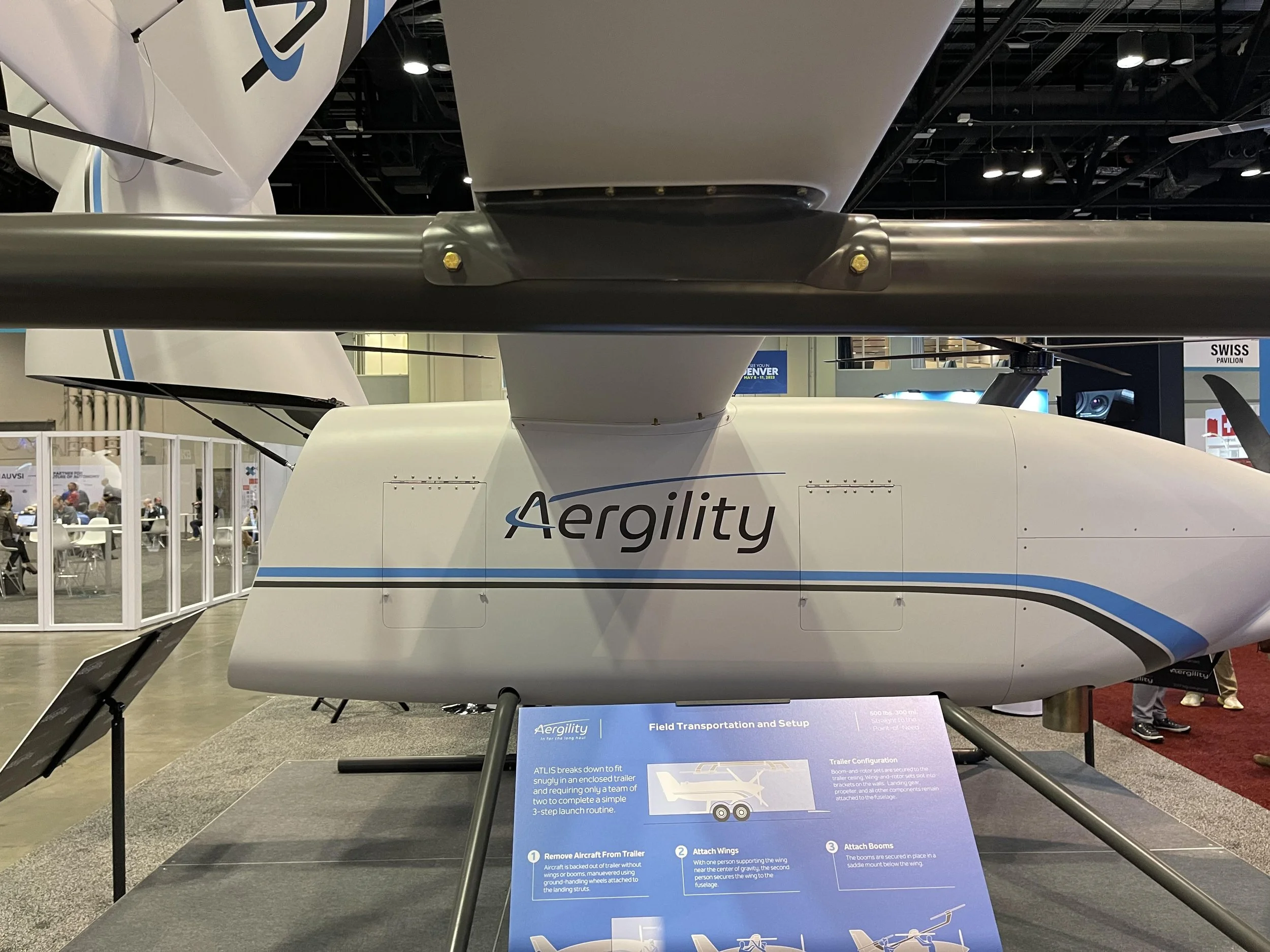
Aergility’s multi fuel, modular eVTOL unmanned aircraft system adapts quickly to multiple payloads and. mission profiles. With extended range, heavy payload capacity, and reduced reliance on infrastructure, it delivers capability where conventional platforms cannot. Designed for scalability and autonomy, the aircraft offers safety through redundancy, minimal moving parts, and simple field support - making it both cost-effective and easy to deploy.
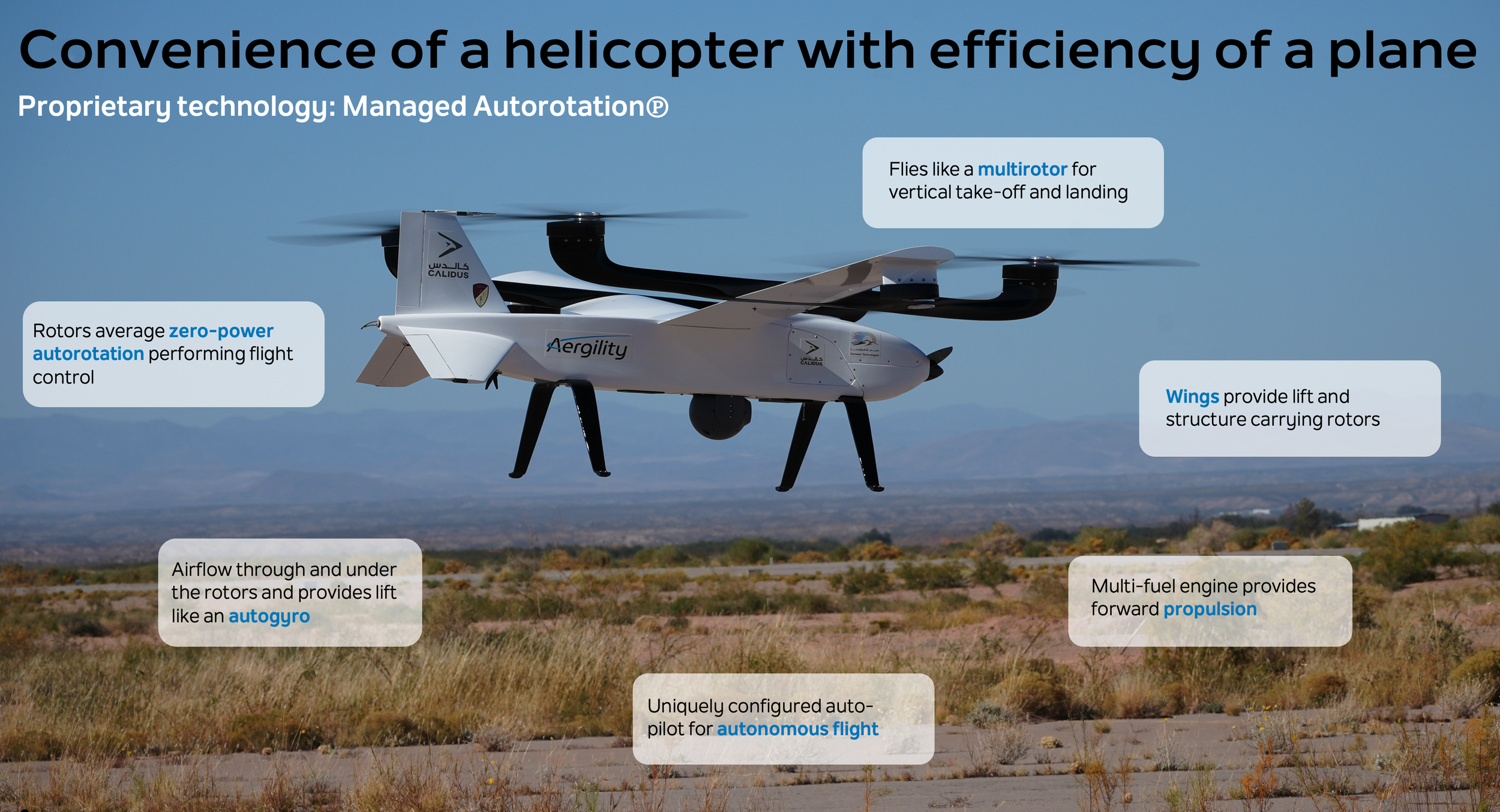
How Managed Autorotation℗ works -three phases of flight
Advanced technology with modular cargo bays and configurable payloads enable rapid adaptation — from humanitarian relief to multi-mission logistics.
Phase 1 — Vertical Take-Off (VTOL): Rotors are powered, providing direct lift. The aircraft takes off and lands vertically from any surface with no runway and no launchpad.
Phase 2 — Transition: The engine engages forward propulsion. As the aircraft accelerates, rotors progressively transition from powered to autorotating — near-zero power consumption while maintaining lift and control.
Phase 3 — Cruise: Wings provide primary aerodynamic lift. Rotors in managed autorotation handle flight control functions using minimal power — delivering fixed-wing-like efficiency with full VTOL capability.
With a smaller footprint than a fixed wing aircraft, it is now possible to access to previously inaccessible or cost prohibitive sites. For added flexibility, the aircraft can be configured with additional sensors, communications, edge autonomy, AI systems dependent on the customer’s operational needs. Aergility can integrate DDIL and low signature solutions for contested and congested logistics (military only).
Unmatched Capability

DDIL Operations suitability
Modular, Scaleable, Universal Use Case
Long-range, heavy-lift payload capacity
Rapid loading and unloading
All-weather eVTOL reliability
Multi-mission platform adaptability
Compact operational footprint
Reduced noise and EW signature
Electronic warfare capability (military only)
Heavy payloads, long range, and true multi-mission performance.
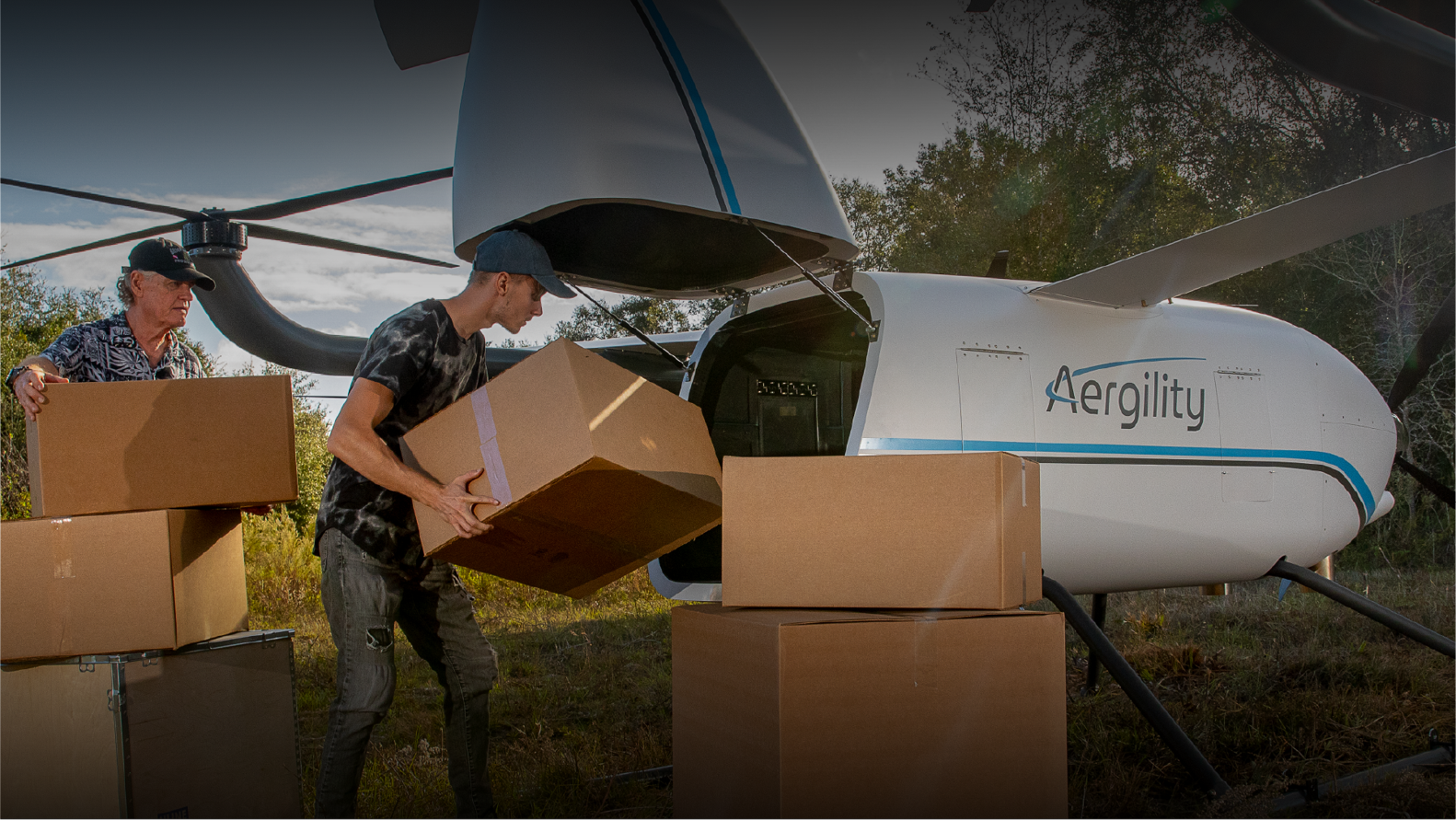
Aergility’s autonomous eVTOL cargo aircraft combine vertical lift with fixed-wing efficiency to deliver over 500 lbs across 500 miles. Compact, all-weather, and mission-flexible, these heavy-lift cargo drones operate reliably in environments where conventional aircrafts cannot.
Operational Simplicity

Fast to deploy, easy to train, and simple to support in the field.
Autonomous UAS are engineered for rapid deployment and straightforward operation. From containerised transport to integrated autopilot systems, these unmanned platforms minimise complexity for crews, reduce training requirements, and shorten time to mission — while remaining cost-effective to operate and support in the field.
Rapid deployment and setup
20 ft containerized transport
Autopilot simplicity and redundancy
Minimal training requirements
UVC integration for mission support
MOSA-compliant architecture
Ground support equipment compatibility
OEM support and sustainment
Cost Advantage
Lower risk, lower overhead, and reduced total cost of ownership.
Eliminates crew and human risk
Reduces political and operational exposure
Lower acquisition and comparable unit cost
Reduced fuel and operating expenses
Minimal training requirements
Limited infrastructure footprint
Simplified maintenance and sustainment
Lowest total cost of ownership in its class
Unmanned cargo aircraft reduce crew risk and minimize infrastructure demands, cutting costs across acquisition, operation, and sustainment. With lower training requirements and simplified logistics, these platforms deliver significant savings and remain one of the most affordable heavy-lift UAV and tactical ISR solutions available.